Tech Trends Shaping Everyday Life in 2026
From AI and accessibility to privacy-first design, these tech trends show how everyday tech is becoming more practical, human, and easier to live with.

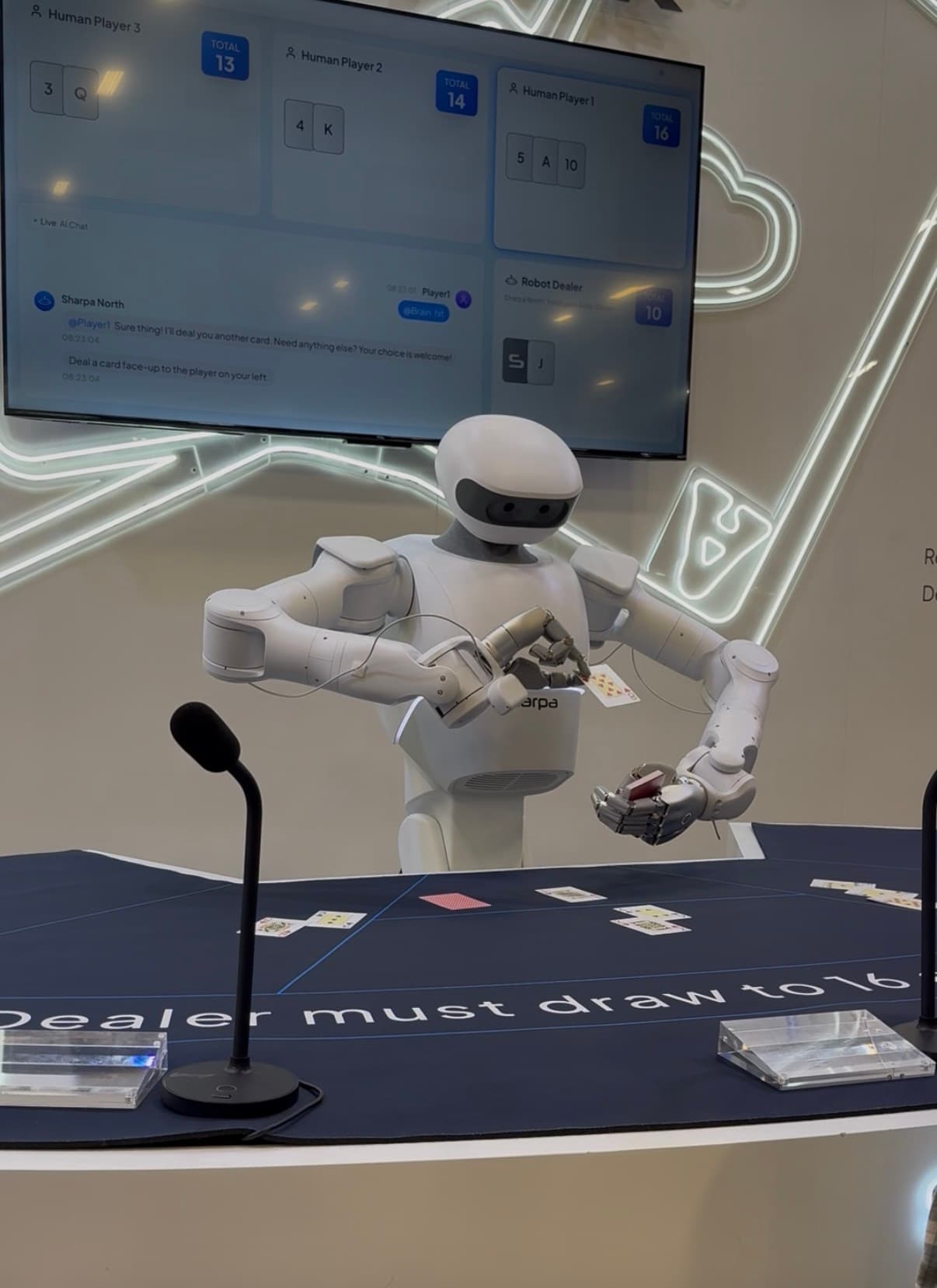
Photo: Rachel Rothman at CES 2026
Every year, thousands of companies gather in Las Vegas for CES, originally short for the Consumer Electronics Show. In recent times though its expanded well beyond the scope of just consumer electronics, and it's more akin to the Super Bowl of technology. It’s where early-stage ideas, big brands, and experimental prototypes show up side by side, offering a preview of the kinds of products and systems we’re likely to see over the next few years. Not everything at CES makes it to market, and not everything that does is worthy of your attention. But taken together, the show lays down a framework for where innovation is heading, not just in gadgets, but in how technology fits into everyday life.
This year marked my 18th professional year covering the show, but my family long exhibited there so its been a mainstay in my life since I was born. This year felt like a seismic shift in terms of the practicality of what's happening in the tech space, with a few clear patterns emerging. As opposed to a year where the showfloor is littered with moonshots or sci-fi concepts, what we saw this year was a quieter, more thoughtful, and more grounded shift in technology that centered around usable products that serve real human needs.
Friction is Now a Design Failure
One of the most noticeable trends this year was how much effort companies are putting into reducing friction. Across categories, including mobility, home, health, and robotics, the strongest products shared a common philosophy: technology should step in quietly and step back quickly. In mobility, this showed up in the absence of flashy consumer EV launches and the rise of autonomous service platforms like Zoox and Waymo showcasing mobility as a service. This signals a broader shift from ownership complexity to infrastructure simplicity.
The impact here is subtle but important. As technology becomes more embedded in daily life, the most useful tools are the ones that respect limited attention and energy. For brands, the practical takeaway is this: the next wave of tech consumers will pay attention to will require less interaction, not more. If a product requires constant checking, updating, or configuring, it’s likely already behind the curve.
AI Is Shifting From Cool to Useful
As expected, artificial intelligence (AI) was everywhere, but it was noticeably less theatrical than last year. Instead of grand “AI assistant” claims, companies focused on more specific and practical use cases: pattern recognition in health data, simplified decision prompts, contextual summaries. AI wasn’t positioned as a replacement for human judgment, it was framed as a filter. In healthcare-adjacent spaces, this included things like AI-assisted screening tools or early diagnostic aids that support professionals rather than replace them.
The takeaway is that AI is starting to mature. Instead of feeling, well, artificial, it feels like someone took a complicated situation and made it easier to understand.
Accessibility Is Setting the Standard
One of the strongest undercurrents this year was accessibility, not as compliance, but as design philosophy. Some of the most interesting products were designed for people with specific needs, and turned out to be better solutions for everyone.
A good example is assistive printing and interface technology, including more affordable and compact tools for translating digital content into tactile formats like braille. While these tools are critical for blind and low-vision users, they also demonstrate a broader design philosophy: information should be usable in more than one way.
We also saw more voice-forward controls, simplified navigation systems, and interfaces designed to work even when users are distracted, fatigued, or overwhelmed. These aren’t niche features, they’re acknowledgments of real life. When products are built to accommodate human variability, they tend to make products stronger for everyone. For consumers, this means that the most resilient products in the next cycle will likely emerge from accessibility-first thinking with interfaces that tolerate distraction, systems that don’t assume perfect memory or controls that work when your hands are full. While this was once viewed as niche, we can recognize that's optimizing for efficiencies for daily life and better accommodating those that need those supports.
Privacy Is Becoming a Selling Point
After years of “collect everything” thinking, CES 2026 showed signs of a course correction. More companies are treating privacy as a design decision, not just a legal one in fine print. That includes products that function with minimal data storage, tools that process information locally rather than sending everything to the cloud, and clearer explanations of what’s being tracked and why. In sensitive areas like health, caregiving, and home monitoring, this shift is especially important.
The impact for consumers is trust. People are far more likely to adopt and stick with technology when they feel confident it isn’t quietly taking more than it gives. Transparency, not technical complexity, is becoming the differentiator.
Health Tech Is Becoming More Human
Health-related technology at CES has traditionally skewed clinical or intimidating. This year, many innovations focused on making care more approachable — especially for kids and families.
That showed up in small but meaningful ways: diagnostic tools designed to look less medical and more familiar, testing formats that reduce fear, and devices that prioritize comfort and ease of use without sacrificing accuracy. Even when the underlying technology was complex, the user experience was intentionally simple.
This reflects a broader understanding that health outcomes aren’t just about precision. They’re also about compliance, comfort, and emotional experience. Products that acknowledge that reality are far more likely to be used correctly — and consistently.
Focused Tools Are Outperforming All-in-One Platforms
The era of the “all-in-one platform” appears to be plateauing. Rather than giant ecosystems that promise to manage everything, many of the strongest ideas at CES were tightly focused. These were tools built to solve one clear problem: support a routine, reduce friction in a specific moment, or make a difficult task easier.
The advantage of this approach is clarity. Users don’t need another platform to learn or manage. They need something that fits into their existing lives. The products that resonated most were the ones that respected that boundary.
Key Takeaway
The biggest tech trend this year wasn’t a device or a breakthrough, it was a shift in mindset. Innovation is moving away from spectacle and toward usefulness. Away from complexity and toward clarity. Away from “look what we built” and toward “does this actually help?”
CES 2026 suggested that the next generation of consumer technology won’t be defined by how advanced it is, but by how well it supports real people, in real moments, without asking too much in return. That doesn’t mean innovation is slowing, but rather becoming more selective and more aware that the modern consumer’s most limited resource isn’t money or bandwidth, it's cognitive energy. And that feels like progress worth celebrating.
Rachel Rothman is a mechanical engineer and consumer product expert with deep experience in product testing, evaluation, and industry standards. She applies a rigorous, performance-first approach to assessing products across categories, translating technical insights into clear guidance that helps consumers make informed decisions.