The Rise of Neuroinclusive Toys
Learn how universal design is rewriting the rules of play.

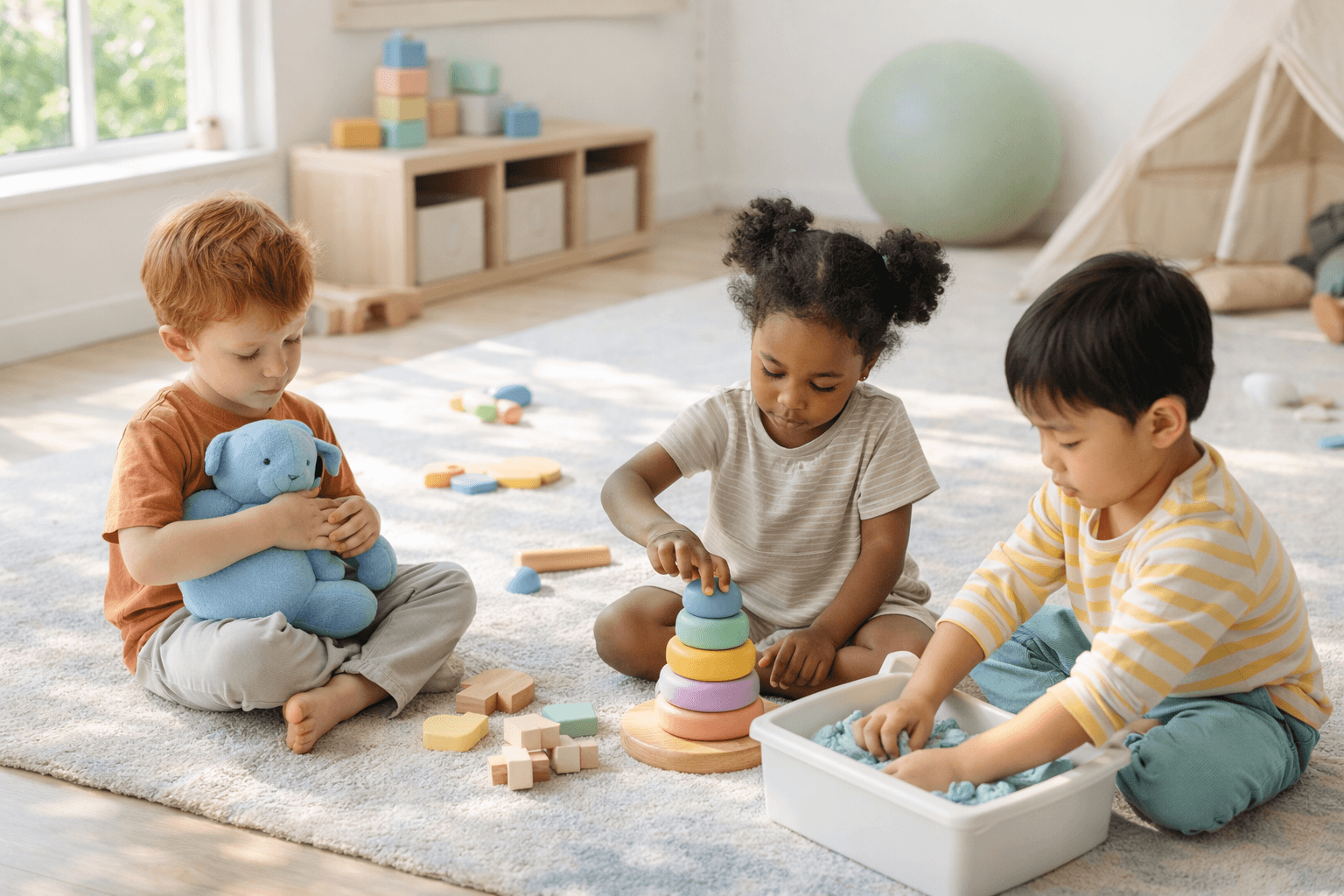
Photo: ChatGPT
Play has always been the language of childhood. It’s how kids make sense of the world — experimenting, connecting, building confidence, and discovering who they are. Through play, kids test ideas, negotiate relationships, and learn what their bodies and minds can do.
But for a long time, the tools of play were designed around a narrow expectation of how children should think, move, and engage. When a child didn’t fit that expectation, when they needed more movement, more predictability, more quiet, or simply a different rhythm, the mismatch was often interpreted as a problem in the child rather than in the design.
That perspective is beginning to change. Today, more designers and educators are asking a different question: What if play didn’t require children to adapt themselves in order to participate? What if toys were built with neurological diversity in mind from the very beginning?
Neuroinclusive design isn’t about creating a separate category of toys. It’s about recognizing that variation is the norm, and designing play experiences that welcome that variation instead of resisting it.
We spoke with therapists and educators to better understand the importance of neuroinclusive toys. Jennifer Jaye, LCSW and play therapist, believes “every child deserves a play experience that honors who they are. Affirming practices are crucial for children and families who too often hear that the way they think, what they desire, what ultimately feels right, is wrong, and that other people know what’s best for them. It is fundamental to create a space where everyone feels good about who they are.”
From “Special Needs” to Universal Design
Not long ago, toys designed for neurodivergent children lived in a separate ecosystem. They were labeled “therapeutic,” sold through specialty retailers, and often designed with function in mind but little attention to aesthetics or broad appeal. They served an important purpose, but they also reinforced a quiet message: some children play here, and others play there.
What’s emerging instead is a universal design mindset: products built to work for the widest possible range of people from the start, without requiring special editions or accommodations. The shift isn’t about eliminating support, it’s about embedding it.
Educational consultant Juliana Blum Bryansmith of Wee-Wellness Neurodiversity Parent Support Programs explains that many traditional toys unintentionally create barriers. “When play relies on overwhelming stimulation, implied social rules, or a single ‘correct’ way to engage,” she says, “some children are quietly sidelined.” The exclusion is rarely deliberate. It’s structural.
Universal design widens the entry points. Rather than prescribing one way to play, it builds in flexibility — different ways to engage, different ways to participate, different ways to succeed.
Jaye notes, “Play is where children practice being fully themselves. Empowering every child through play begins with recognizing there is no single ‘right’ way to engage. Differences are crucial and variability is fundamental because sensory profiles and preferences vary, internal states shift and even details like weight or size of objects will completely alter a child’s experience."
That’s the real evolution. Neuroinclusive design doesn’t lower expectations or dilute challenge. It removes unnecessary friction so children can bring their strengths to the experience.
What Makes a Toy Truly Neuroinclusive?
So what do neuroinclusive toys look like in practice? When I evaluate toys, whether for my own home or more formally, I’m not looking for buzzwords. I’m looking for design decisions that remove friction. A few patterns show up again and again, and have the backing of developmental experts as well.
Sensory regulation over sensory overload: Great sensory design isn’t about adding more, it’s about balance and control. Thoughtful sensory design prioritizes modulation, not intensity. Toys that allow children to adjust input are more likely to support regulation because arousal needs shift. As Jaye notes, “Some children need to upregulate; others need support calming. The right input depends on the moment.”
Explicit social-emotional cues: Many neurodivergent children process social information differently. Toys that make emotions and interactions visible, through facial expressions, mirrors, or cooperative gameplay, turn abstract concepts like empathy or frustration into something concrete. These tools don’t force socialization; they invite it.
Multiple social entry points: Toys that work for solo play, parallel play, and cooperative play reduce pressure and expand belonging.
Clear, predictable cause-and-effect: For children who struggle with executive function or sequencing, predictability can build confidence. Toys where one action reliably leads to one outcome, marble runs, simple mechanisms, gear systems, offer a sense of agency. The child learns: I act, something happens, I understand why.
Open-ended play without a “right” answer: For anxious or perfectionistic children, fear of doing it wrong can shut play down entirely. Open-ended materials like blocks, magnetic tiles, or unpainted figures, remove that pressure. There’s no evaluation, competition or performance, just exploration. That freedom is often where creativity and deep focus emerge. Jaye expands, "Open-ended play allows for novelty, spontaneity and discovery, the kind of elaboration you can't access if you were too concerned about an outcome. Children need to feel safe enough to explore with uncertainty. That sense of safety is what builds confidence, resilience, and creativity.
She urges parents to “be mindful of toys that are overly prescriptive. Open-ended materials allow children to move at their own pace, adapt, and engage with others, which supports regulation and connection. Some materials can lead to more self involvement, rigidity and repetition instead of inviting interaction. Ideally, the child is always doing the thinking and imagining, not the toy.”
When Inclusion Is Just a Label
While it’s encouraging to see brands highlight sensory-friendly and inclusive design, those terms can’t become empty buzzwords. Inclusion requires authenticity and clarity. Real inclusion requires listening. It means partnering with occupational therapists, educators, families, and neurodivergent children themselves. When lived experience informs ideation and design, empathy becomes embedded from the start.
“I’ve seen simple adjustments, like lowering sensory intensity, offering visual supports, removing time pressure, or reframing a game to allow cooperative rather than competitive play, lead to dramatically increased participation,” Bryansmith says. “Small shifts in structure can lead to significant shifts in identity.”
A truly neuroinclusive toy doesn’t just add texture or color; it respects the way a child’s brain processes information. Too often, well-intentioned products overload the senses with too many lights, unpredictable sounds, or confusing feedback, creating frustration instead of joy.
A quick litmus test: if a toy’s lights/sounds are unpredictable, the rules are implied rather than explicit, or there’s only one “successful” way to use it, the toy may create more frustration than joy, especially for kids who need clarity or sensory control.
Beyond Toys: Designing for Belonging
You don’t need the ‘perfect toy’, you need opportunities for connection. Jaye shares that the most important ingredient in play is a responsive adult who’s curious about what the child is experiencing. "When evaluating toys, I look beyond features and consider how they support engagement, regulation, creativity, and connection, because those are the foundations of meaningful play.”
Neuroinclusive play doesn’t stop with individual products. It extends into how we design playrooms, classrooms, and shared spaces. Rotating toys instead of displaying everything at once can reduce visual overload. Jaye reminds us that all play is valuable. This sends a powerful message: you belong here as you are.
At its heart, neuroinclusive play is about belonging. "Belonging during play looks like access and contribution,” Bryansmith says, where every child has a meaningful entry point and the freedom to bring their strengths into the experience.
It allows children to join the circle without masking who they are, and it gives parents the relief of watching their child find connection through play, not in spite of it.
The Takeaway
Neuroinclusive play isn’t about therapy, it’s about empathy. It’s what happens when design, science, and humanity finally share the same sandbox. When we build for difference, we create connection. Neuroinclusive toys work not because they do more, but because they understand children more deeply. Jaye highlights a key principle of neuro-inclusive design: “When you design for the edges, you don’t narrow access, you expand it.”
The next generation of toys won’t be about adding new features, but rather will focus on removing barriers. Because when play truly works for every child, everyone wins.
Rachel Rothman is a mechanical engineer and consumer product expert with deep experience in product testing, evaluation, and industry standards. She applies a rigorous, performance-first approach to assessing products across categories, translating technical insights into clear guidance that helps consumers make informed decisions.