How Long Can You Really Keep Your Favorite Lipstick?
Experts explain how bullet lipsticks age, which risks are real and which signs matter most.

Photo: Andriyko Podilnyk for Unsplash
This question didn’t come out of a lab or a focus group. It came up on a Zoom call. During a routine check-in with my Best of the Year cofounders, the conversation drifted, as it often does, to beauty. Lipsticks were held up to webcams, favorites admired, until one of us finally said it out loud: I’ve had this lipstick since I moved to New York more than a decade ago.
That admission opened the floodgates. I’ll be the first to say I’m not a minimalist when it comes to lipsticks. I have more than a dozen in regular rotation, and yes, I tend to form emotional attachments to them. Several have been with me for three, five, even more years. They still glide well, don’t smell off, and haven’t changed in any obvious way. Which raises an uncomfortable but very real question: if everything seems fine, is there actually a problem?
Conventional advice is clear. Organizations like the American Academy of Dermatology recommend replacing bullet lipsticks after about two years. Those guidelines exist for good reason, designed to reduce risk across a broad population. But they rarely account for differences in formulation type, packaging, storage, or how products actually age over time. So instead of defaulting to the calendar, we decided to ask a more nuanced question: what really happens to a bullet lipstick as it gets older, and how should consumers think about shelf life when science, not fear, leads the conversation?
“”
What’s Inside a Bullet Lipstick?
To understand how long a lipstick can realistically last, it helps to understand how it’s built.
“Bullet lipsticks are essentially anhydrous systems,” explains Hyunah Cho, Professor of Pharmaceutical Sciences at Fairleigh Dickinson University and CEO of Spill Essentials, a waterless personal care brand. “Water is essential for microbial growth. Without it, the dominant stability and safety concerns shift.” Because bullet lipsticks contain little to no free water, microbial growth is generally not the primary risk. Instead, chemical and physical degradation take center stage.
According to Dr. Ebru Karpuzoglu, immunologist and founder and CEO of skincare brand AveSeena, a classic bullet lipstick is engineered as a precise balance of solids and liquids, organized into four interdependent parts: framework, carrier, color, and defense.
The framework consists of waxes that give the lipstick its solid shape and influence how it melts, applies, and wears. The carrier system—primarily oils and emollients—controls glide, moisture, and shine, and is also the most chemically vulnerable. “These oils contain unsaturated fatty acids with reactive double bonds,” Karpuzoglu explains, “making them prone to oxidation and the weakest link in a lipstick’s chemical shelf life.”
The color phase comes from finely milled pigments and dyes dispersed throughout the wax–oil matrix. If pigments migrate or settle over time, color payoff can become uneven, or the lipstick may feel gritty or inconsistent from swipe to swipe. Finally, there’s the defense system: antioxidants such as vitamin E, BHA, or BHT. These ingredients slow degradation by reacting with free radicals themselves. Once these antioxidants are depleted, the formula is left exposed and degradation can accelerate.
“”
Pigment stability adds another layer to how lipsticks age. According to Kelly Dobos, consultant cosmetic chemist and adjunct instructor in the cosmetic science program at the University of Cincinnati, the types of colorants used in lipsticks vary widely in both chemistry and longevity.
“There are two broad pigment categories in lipsticks,” Dobos explains. “Synthetic organic pigments, which include many bright reds and fuchsias, and inorganic pigments like iron oxides, which tend to produce more muted reds, yellows, and browns.” In general, inorganic pigments are inherently more stable over time, while some organic pigments can fade with prolonged exposure to light, particularly high-energy UV.
Pearlescent pigments such as mica, which create shimmer and sparkle, are typically quite stable. However, Dobos notes that color shifts consumers notice over time are often influenced not just by the pigments themselves, but by changes elsewhere in the formula.
“”
How Lipsticks Degrade Over Time
Oxidation of the oil phase occurs as oxygen repeatedly enters the tube during use, a process accelerated by heat and light, particularly UV exposure. As unsaturated fats break down, they form volatile compounds—short-chain aldehydes and ketones—responsible for odors often described as sour, waxy, or reminiscent of old crayons. “When you detect this smell,” says Karpuzoglu, “it means the antioxidant defense system has been exhausted and the formula is actively degrading.” Dobos adds that pigment changes consumers notice are often secondary effects. As oils oxidize, they can subtly alter how pigments are perceived, leading to dulling or shade shifts even when the pigments themselves remain chemically intact.
Physical instability shows up in texture and appearance. One common phenomenon is “sweating,” technically called syneresis, where oils separate from the wax structure and migrate to the surface, often after temperature fluctuations. Another is “wax bloom,” a white or grayish haze that appears when waxes melt and resolidify into larger crystals that scatter light. While these changes don’t automatically mean a lipstick is unsafe, they do indicate the internal structure has been compromised and that further degradation is likely.
Light exposure can also play a role in long-term appearance. Dobos notes that some manufacturers incorporate UV absorbers into packaging materials, especially those that are transparent for consumers to see the shade, to help protect color integrity over time. While this is not visible to consumers, it’s one of several behind-the-scenes design choices that can influence how well a lipstick’s color holds up with age.
Biological contamination is less common but carries greater health implications. Because bullet lipsticks contain no water, they’re naturally inhospitable to microbial growth. However, contamination begins the moment a lipstick is used. Each application transfers skin cells, oral bacteria, and traces of saliva to the bullet surface. Over time—especially if moisture is introduced—microorganisms can persist. Sharing lipsticks is never advisable.
Cho agrees that unlike water-based systems where microbial growth is the dominant concern, in bullet lipsticks, chemical oxidation of oils, volatilization of fragrance compounds, wax crystallinity changes, and pigment dispersion instability take precedence.
“”
The Two-Year Guidance vs. Reality
Dermatologists often advise replacing bullet lipsticks after about two years, guidance that’s frequently repeated without much context. According to Karpuzoglu, this recommendation is intentionally conservative.
The two-year window reflects a maximum Period After Opening under typical use conditions. An unopened lipstick stored in a cool, dark place can remain chemically stable for several years. Once opened and used regularly, however, the clock truly starts.
From a formulation and safety standpoint, Karpuzoglu suggests that 12 to 18 months is a more realistic window for a frequently used bullet lipstick. That timeframe accounts for ongoing oxygen exposure, depletion of antioxidants, and repeated transfer of biological material to a product applied to mucous membrane tissue. Importantly, this isn’t about sudden toxicity. “Your lipstick will not poison you on day 366,” she emphasizes. Rather, the concern is cumulative degradation and erosion of the safety buffer over time.
Cho echoes that perspective. The most realistic concerns, she says, are irritation from oxidized oils and surface contamination from daily use—not systemic toxicity. She also pushes back on two common fears. “Bacterial growth in bullet lipsticks is often overstated, and concerns about heavy-metal exposure from aging pigments are unfounded.” Dobos reinforces this point from a regulatory perspective.
Color additives used in cosmetics are tightly controlled, particularly in the United States. Synthetic organic pigments, often identified on ingredient labels by a color name and number (such as Red 7 or Blue 1), must undergo batch certification by the FDA before they can be sold to cosmetic manufacturers.
“These are among the most rigorously evaluated cosmetic ingredients,” Dobos explains. Aging does not increase heavy metal content, and FDA monitoring consistently finds impurity levels well below established safety thresholds.
“”
The Cues That Matter More Than the Calendar
Experts agree: sensory evaluation matters more than dates.
Smell is the most reliable indicator of chemical failure. Sour, waxy, or crayon-like odors signal oxidation and are a clear cue to discard.
Texture changes—grittiness, excessive hardness, crumbling, stickiness, or oil sweating—indicate physical instability.
Appearance shifts, such as darkening, color changes, separation, or any sign of mold (rare but possible), suggest chemical or biological degradation.
Storage plays a major role in how quickly these changes occur. Lipsticks should be kept in a cool, dry place, away from humidity and temperature swings. Caps should be sealed tightly after use to minimize light and air exposure. Surface sanitizing with alcohol can temporarily reduce microbes, but it cannot reverse oxidation or reset the expiration clock.
And price offers no immunity: a luxury lipstick subjected to poor storage conditions will degrade just as surely as a drugstore one. As Karpuzoglu notes, the chemistry doesn’t care about the price point.
Cho’s personal approach mirrors the science. She notices smell first, then surface cleanliness and texture. If the scent is off or the texture no longer feels right, she doesn’t hesitate to discard it. “Ultimately,” she says, “a lipstick is finished when its chemistry says so, not when the calendar does.”
“”
So… How Long Is Too Long?
A well-formulated lipstick, used regularly, stored properly, and evaluated with a critical eye—and nose—may last longer than blanket advice suggests. At the same time, a large collection of rarely used bullets quietly aging in a drawer may be doing you no favors.
The takeaway isn’t to panic-toss everything or to keep products indefinitely. It’s to understand what’s happening inside the tube and make informed decisions based on observable, science-backed cues rather than fear-driven timelines.
I’ll admit that part of why I hang on to certain lipsticks has nothing to do with denial and everything to do with reality: some shades simply disappear. Formulas get reformulated, colors get discontinued, and what once worked perfectly for your skin tone may no longer exist on the shelf. When that happens, using a lipstick thoughtfully, storing it well, and paying attention to how it’s aging feels less like rule-breaking and more like informed choice.
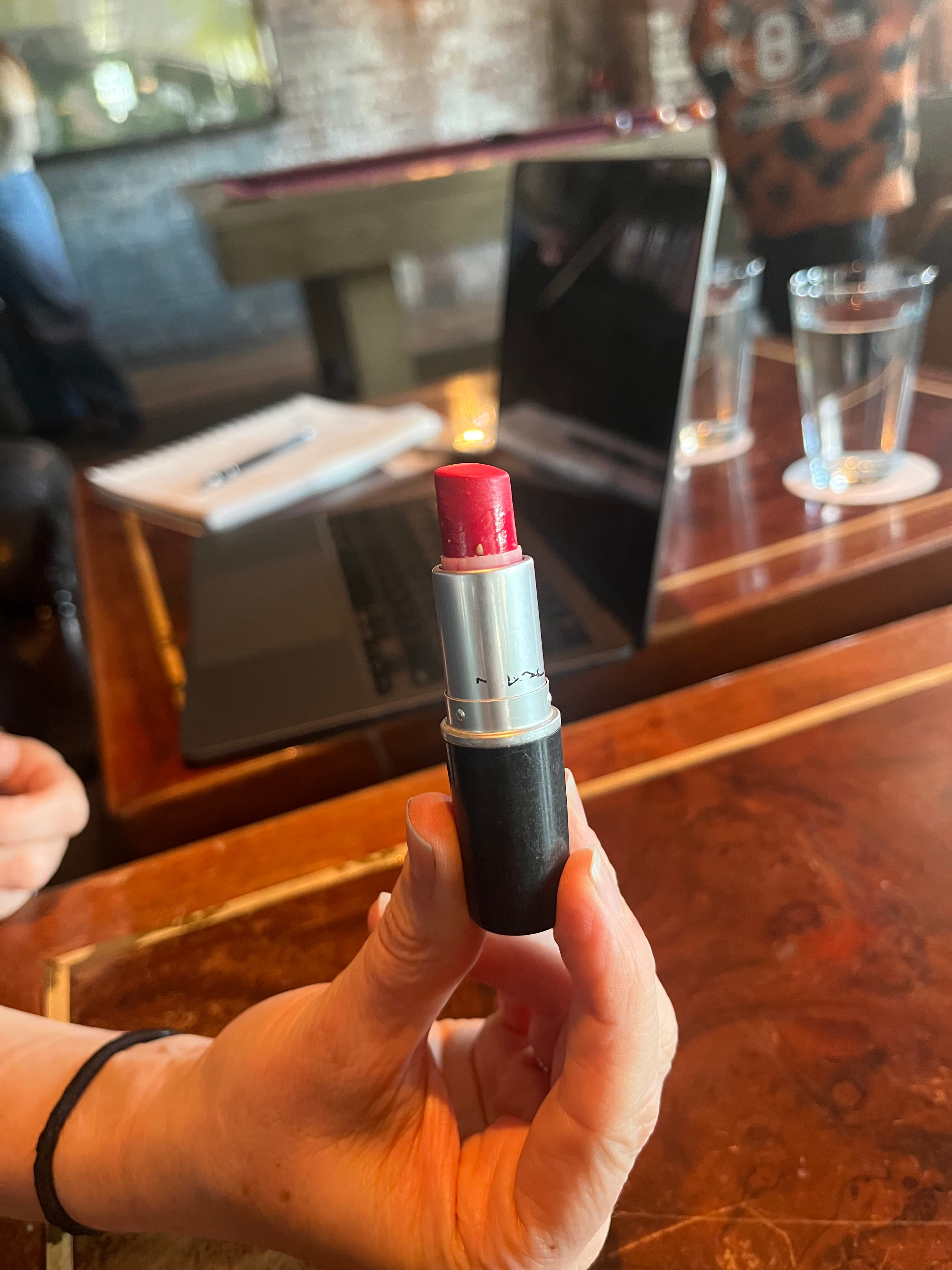
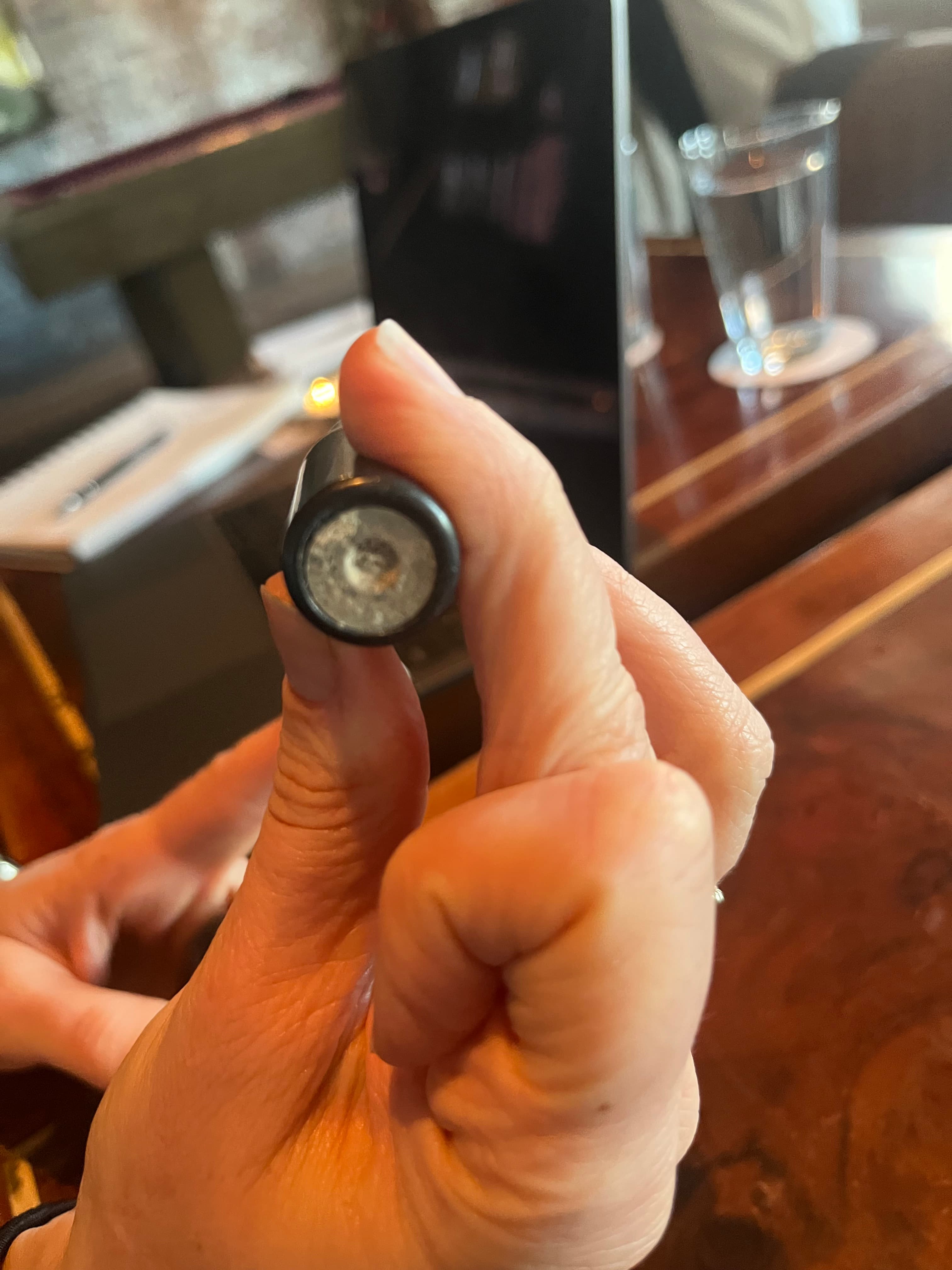
Photo: Birnur Aral at Soho House, NYC
Birnur Aral, PhD, is a chemical engineer and consumer product expert with a career spanning research and development, testing, and sustainability. She brings a rigorous, evidence-first lens to product claims and consumer-facing topics.